

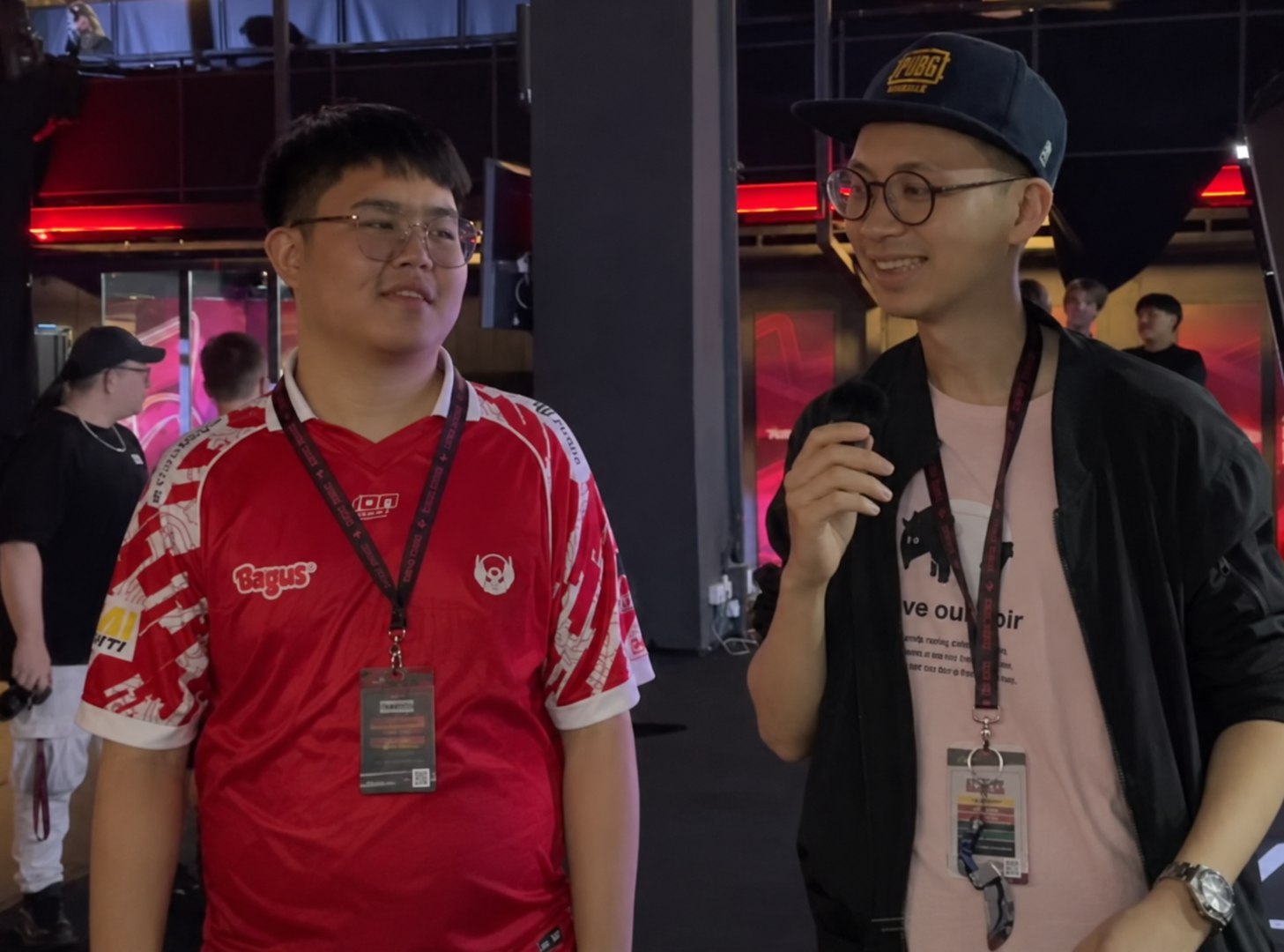
Edited still from my interview with Satar during his Bigetron Red Villains days.
At the internet café where Nicil worked in Manado, he got to know two other players, Satar and Booms. They played shooters together and eventually formed a team called Bot Squad. Getting into PUBG Mobile presented a practical problem. Nicil had no smartphone, and the Android phones Satar and Booms used struggled to run the game. Nicil’s account in ONE Esports
Grace Blessing, a co-founder of Genesis Dogma, helped Nicil get a phone. Nicil found others who could help Satar and Booms get suitable devices. They could finally practise together and enter local tournaments. That detail matters to me because it shows how ordinary the first step can be. Someone had the means to help and knew who else to ask. The players then had a chance to do something with that help. ONE Esports on the team’s early years
Years later, Alan Raynold Kumaseh, better known as Satar, helped lead AK Gold Esports to the 2026 PUBG Mobile Global Championship (PMGC). Between the café and the world stage were years of practice, people willing to share what they knew, and competitions that gave players in North Sulawesi somewhere to prove themselves. PMGC qualification record · Level Infinite’s Lahore recap
How Satar learned to lead under pressure
By 2021, Satar was Genesis Dogma GIDS’ in-game leader, the player responsible for calling decisions such as when to move or take a fight. Genesis Dogma won the Indonesian league’s Season 4 final, and he took Finals MVP. He went on to win two individual PUBG Mobile silver medals at the SEA Games and a team gold with Indonesia in Cambodia. ONE Esports’ 2021 interview with Satar · Indonesian Olympic Committee
As an esports educator, I’m interested in how precisely Satar could name the skill he wanted to improve. He told ONE Esports that he would practise alone against full squads to work on staying calm. In March 2026, while playing for Pangeran McJoe, he told Dunia Games how he responded to a disappointing league phase. He asked his teammates to focus on making the most of each finals match, even with a points gap to close. Pangeran McJoe finished second. I like how specific that advice was. It gave the players something they could act on before the standings moved. ONE Esports on Satar’s practice · Dunia Games’ Pangeran McJoe interview · Spring finals results
How AK Gold reached PMGC through Malaysia
AK Gold was a new professional team with community roots. North Sulawesi outlet Inspirasi Kawanua credits owner Arnaldo Kamagi with building the club in North Minahasa. Tournament records show that it took over Team Adre Alistair’s Indonesian league berth and brought in two of its players, Zao and Grumpy. Satar, Ametz and Vinz rounded out the five. Vinz had already won a 2022 city qualifier with RUBIC at Star Square in Manado. By the time AK Gold came together, its players had experience the new club could build on. Inspirasi Kawanua · Indonesian league entry and transfers · 2022 city tournament records
The team finished third at the Indonesian finals in Manado in August. Its next stop was 1 Utama in Petaling Jaya, where it placed fourth at the PUBG Mobile Global Open (PMGO) Southeast Asia finals in September and booked its place in Lahore. Satar was named Finals MVP in Malaysia. Before Lahore, Zao described studying footage of opponents and paying attention to sleep and meals. His account gives us a glimpse of preparation that rarely makes a highlight reel. Manado finals coverage · Petaling Jaya results and awards · Sixnal’s report on Zao
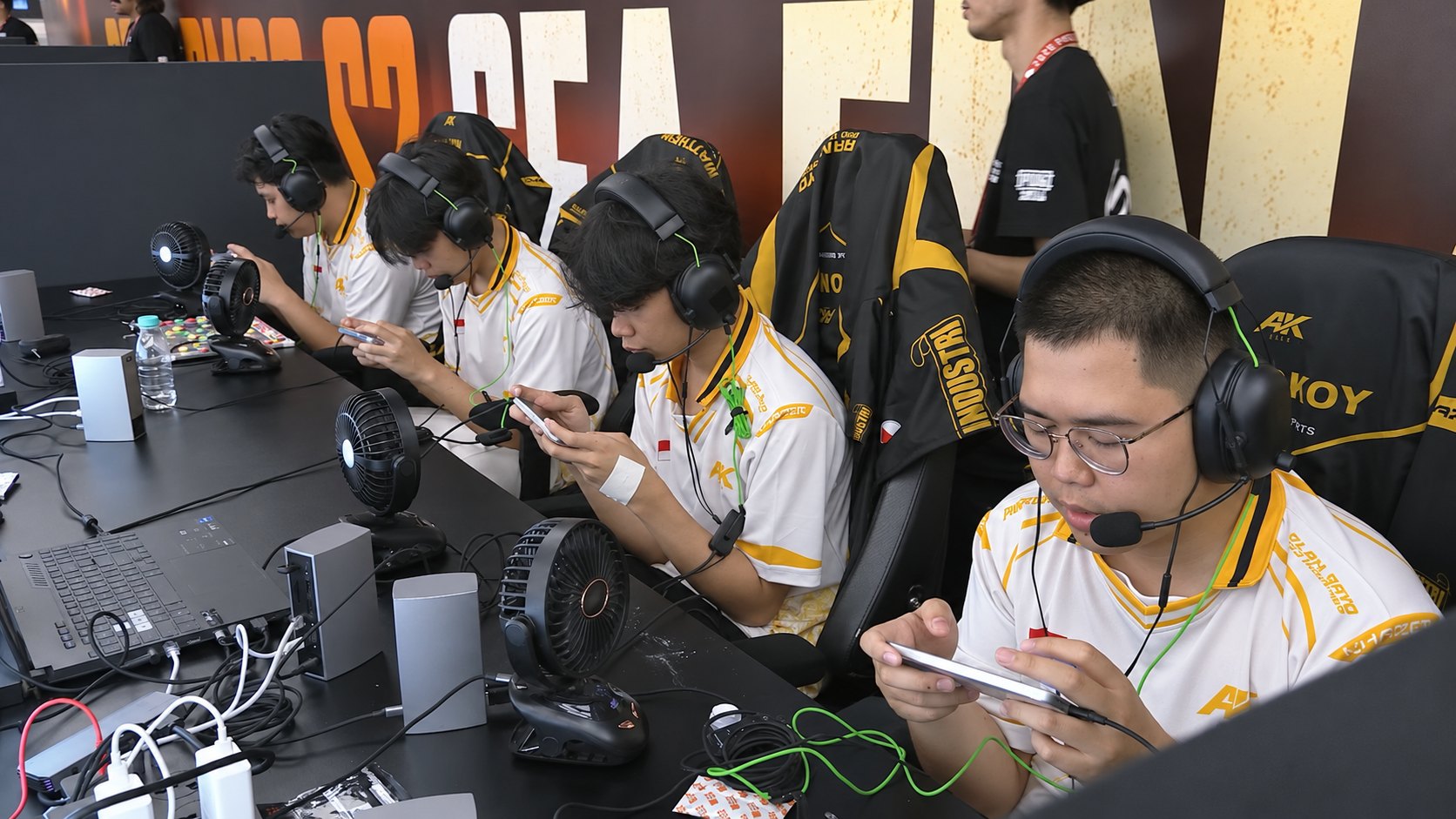
In Lahore, AK Gold scored 94 points, the most in the Grand Finals. The tournament’s Smash Rule required an eligible team to win a match after reaching the points threshold. Wolves Esports did it in Match 12 and took the trophy. AK Gold finished second and Satar earned Best In-Game Leader. In the separate race to qualify for PMGC, AK Gold led Southeast Asia with 133 points. Petaling Jaya accounted for 37 of those points, and Lahore supplied the remaining 96. TalkEsport on the Smash Rule · Level Infinite’s awards recap · Circuit points breakdown · PMGC qualification record
What a community can do to help someone persevere
Psychologist Angela Duckworth and her colleagues described grit as sustained effort and interest in long-term goals. A later review of 88 independent samples found a moderate link between grit and performance, with perseverance of effort the more informative component. That makes me curious about what allows someone to keep putting in the effort. Satar had to practise. A phone he could play on, friends to practise with and local events to enter made that practice possible. Resilience researcher Michael Ungar asks us to pay attention to those resources and the people who make them available. Duckworth and colleagues on grit · Credé and colleagues’ review · Ungar on the social ecology of resilience
Education researchers Jean Lave and Etienne Wenger call it situated learning when people develop skills by taking part in the real work of a community. Another idea, cognitive apprenticeship, explains how an experienced person can help by saying what they noticed and why they made a decision, then giving the learner room to try. Think of a first-time volunteer at a neighbourhood event. Pair them with someone experienced for the first check-in shift. Let them see how that person handles a queue and hear the reasoning. Then let the newcomer run the next shift with help nearby. They leave with experience they can use at the next event. Lave and Wenger on situated learning · Collins, Brown and Holum on cognitive apprenticeship
After a school project, a volunteer shift or an esports scrim, take five minutes together and ask three questions.
- What did we expect to happen?
- What actually happened?
- What should we change before the next event?
Pick one change and see how it works next time. Give everyone a chance to contribute what they saw, including the person who just joined. If several ideas come up, my 1-3-1 framework for esports decision-making offers a way to compare options and choose one. Tannenbaum and Cerasoli on structured debriefs
I keep coming back to Nicil asking around for a phone. The people who helped him could see a problem they had the means to solve. Who would get a proper chance to take part if we lent them something, showed them how we do it, or trusted them to take the next turn?