

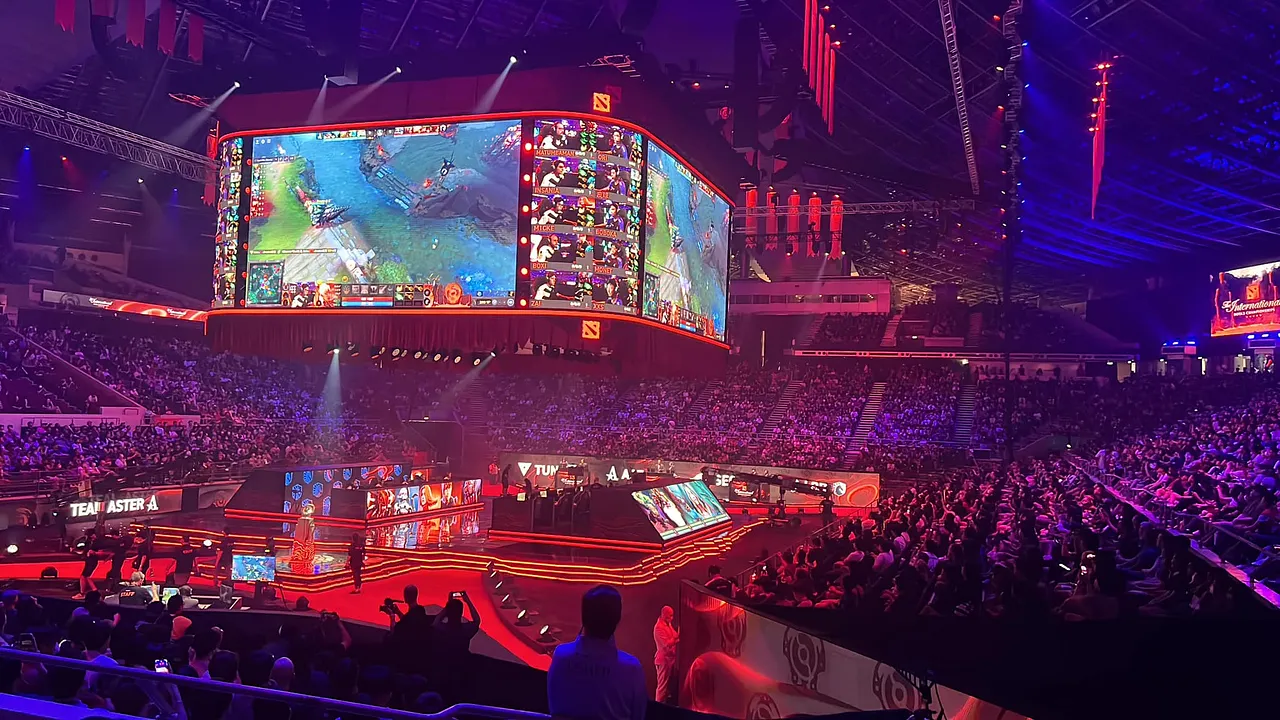
The future of esports will be defined less by whether competitive gaming can attract an audience and more by whether publishers, teams, organisers and governments can build stable systems around that audience. Esports is already a mainstream form of entertainment in several markets. The next phase will focus on sustainable team economics, better player support, mobile-first competition, creator-led distribution, artificial intelligence and clearer governance.
This outlook uses developments confirmed up to October 2026. It separates current evidence from predictions because esports changes quickly and no single game, platform or governing body represents the whole industry.
Quick answer: what is the future of esports?
The future of esports is likely to be more mobile, more creator-driven and more professionally managed. AI will support training, production and moderation, but it will not remove the need for human coaches, analysts and officials. National-team events will grow alongside publisher-run leagues, while teams will search for revenue beyond sponsorship and prize money. Player welfare, safe listening, contracts, integrity and youth protection will become more important as the industry matures.
Key takeaways
- Mobile competition will remain central to esports growth in Southeast Asia and other mobile-first markets.
- AI will improve analysis and content production, but human judgement will remain essential.
- Country-based events and publisher circuits will coexist rather than merge into one global system.
- Teams need stronger income from digital products, content, communities and events.
- Player welfare, integrity and governance will become business requirements, not optional extras.
Future of esports: the 2026 reality check
The strongest current signals show an industry with substantial reach but uneven commercial maturity. Audience studies, event programmes, public funding and health standards measure different parts of the ecosystem, so they should not be combined into one market-size claim.
| Signal | Current evidence | Why it matters |
|---|---|---|
| Audience potential | Deloitte reported 94% esports awareness across six Southeast Asian markets, but only 32% watched for at least one hour per week. | The opportunity is not only finding new viewers. It is converting occasional viewers into regular fans. |
| Mobile behaviour | The same Deloitte study found that mobile devices represented nearly 55% of gaming hours among the surveyed Southeast Asian audience. | Mobile esports is a core competitive format in the region, not a smaller copy of PC esports. |
| Sporting recognition | The Olympic Council of Asia confirmed esports would remain in the Asian Games after the 2026 programme featured 11 medal events. | National-team pathways are becoming a permanent layer alongside professional publisher leagues. |
| Olympic pathway | The IOC is developing a new partnership model for the first Olympic Esports Games and says the event should take place as soon as possible. | Olympic interest is real, but the date, host model and final format should not be treated as settled. |
| Health standards | The WHO and ITU published a global safe-listening standard for video gameplay and esports in 2025. | Health and welfare expectations are moving from general advice toward practical technical standards. |
| Malaysia | Malaysia’s KBS launched RM1 million in DEK 2026 funding and RM500,000 for MEAP 2026. | Public support is increasingly linked to events, digital content, team preparation and development outcomes. |
Seven trends shaping the future of esports
1. AI will become an assistant for coaches, players and broadcasters
Artificial intelligence is most useful when it reduces repetitive work. Teams can use it to organise match footage, tag recurring situations, compare performance patterns and prepare questions for human review. Broadcasters can use automated tools to identify highlights, generate statistics and adapt content for different platforms.
AI output should not be treated as objective truth. Competitive games change through patches, opponents behave unpredictably and incomplete data can produce confident but misleading conclusions. The strongest teams will combine machine-assisted analysis with the contextual judgement of coaches, analysts and players. They will also need clear rules for privacy, data ownership and the disclosure of synthetic content.
2. Mobile and cross-platform competition will keep expanding
Mobile esports lowers the equipment barrier for players and audiences. This is especially important in Southeast Asia, where mobile play already represents a large share of gaming time. Titles such as Mobile Legends: Bang Bang, PUBG Mobile, Honor of Kings and Free Fire demonstrate that mobile competition can support professional leagues, national teams, creators and large live events.
This does not mean PC and console esports will disappear. High-end tactical games, multiplayer online battle arenas, fighting games and sports simulations serve different communities. The likely future is a broader mix of mobile, PC, console and cross-platform circuits, with success depending on the strength of each game’s community and publisher support.
3. National-team events will grow alongside publisher leagues
The Asian Games showed how esports can work within a multi-sport structure. The 2026 programme included 11 medal events, and the OCA also confirmed the first Asian E-sports and Mind Sports Games for Kuwait in 2027. These events create national selection processes, athlete-support needs and public visibility that differ from club-based professional leagues.
The Olympic pathway remains less certain. The IOC still intends to stage Olympic Esports Games, but it is developing a revised model after moving away from its initial partnership arrangement. This is a useful reminder that institutional recognition will grow through several formats, not through one organisation taking control of all esports.
4. Esports viewing will become more fragmented and more personal
Fans no longer experience a tournament only through the main broadcast. They may watch a co-stream, follow a player on social media, see highlights on TikTok, join a Discord discussion and return for the final. For younger audiences, the surrounding content can be as important as the match itself.
The next generation of broadcasts will use more real-time statistics, interactive replays, local-language commentary and personalised highlights. Deloitte’s Southeast Asian research found strong esports engagement across Facebook, TikTok and Instagram, while YouTube Gaming and Facebook Gaming were important viewing platforms. Organisers should design one story that can travel across live broadcasts, short video, creator channels and community spaces.
5. Team business models will move closer to games and communities
Sponsorship will remain important, but it cannot carry every organisation. Teams need a wider mix of income that may include in-game digital items, merchandise, memberships, creator content, events, education, consulting and commercial partnerships that fit their audiences.
Riot Games has argued that one scalable path is to monetise esports more like games, with shared income from digital products supporting teams and players. Its updated League of Legends model increased the role of digital content revenue alongside sponsorship and media income. Other publishers may choose different structures, but the principle is relevant across the industry: teams need revenue connected to the value they create for a game and its community.
6. Player welfare will become a competitive advantage
Professionalisation should include more than salaries and uniforms. Teams need clear contracts, reasonable practice schedules, rest, physical conditioning, nutrition, mental-health support, hearing protection and career planning. Young players also need age-appropriate safeguarding and trusted adults who understand both performance and wellbeing.
The WHO-ITU safe-listening standard shows how specific health risks can become design and operational requirements. Organisations that treat welfare seriously are more likely to retain talent, reduce avoidable harm and earn trust from families, schools, sponsors and regulators.
Related reading: Gaming, youth and the importance of safe emotional spaces.
7. Governance and integrity will become more practical
The future of esports will require clearer answers to ordinary operational questions. Who owns player data? What happens when a publisher changes a league? How are minors protected? What standards apply to contracts, anti-cheat systems, match-fixing investigations, event licensing and insurance?
These issues will not be solved by copying one traditional-sport model. Publishers own the games, tournament organisers run competitions, governments regulate local activity and teams employ or contract talent. Effective governance must define responsibilities across that chain while remaining flexible enough for different titles and markets.
What the future of esports means for Southeast Asia
Southeast Asia is well positioned because it combines a young audience, mobile-first behaviour, local rivalries and strong creator culture. Its challenge is turning reach into regular engagement and stable careers. Deloitte’s 94% awareness figure is impressive, but the drop to 32% regular weekly viewing shows why audience size alone is not enough.
Regional growth will need local-language storytelling, reliable grassroots competitions, clearer player pathways and business models suited to each country. Indonesia, the Philippines, Thailand, Vietnam, Malaysia and Singapore have different strengths. A single regional strategy will miss those differences.
Related reading: The evolution of esports in Southeast Asia.
Malaysia’s opportunity
Malaysia can compete as an event host, development market, production base and multilingual talent hub. KBS stated that DEK 2026 allocated RM1 million for tournaments and digital content, with funding of up to RM20,000 per project. The programme targeted 9,000 participants and 2.5 million digital views. MEAP 2026 added RM500,000 to support local teams and players preparing for international competition.
Those figures do not guarantee sustainable growth, but they show where policy is moving. The strongest long-term use of public and private investment would connect events to coaching, officiating, production skills, athlete welfare, education and measurable career pathways.
What stakeholders should do now
| Stakeholder | Priority action | Useful measure |
|---|---|---|
| Players and coaches | Use AI as a review assistant while building healthy training routines and transferable skills. | Performance quality, rest, retention and career progression. |
| Teams | Develop community, creator and digital-product revenue beyond sponsorship. | Recurring revenue, fan retention and partner renewal. |
| Publishers | Provide predictable calendars, transparent rules and meaningful team revenue sharing. | League stability, participation and ecosystem confidence. |
| Organisers | Build safe events with qualified officials, clear dispute processes and reusable media. | Operational quality, safety incidents and repeat participation. |
| Schools and government | Link competition to education, wellbeing, production skills and safeguarding. | Learning outcomes, inclusion and progression into further study or work. |
| Brands | Support credible community programmes and content that adds value between events. | Audience trust, engagement quality and long-term brand fit. |
What could slow the next stage of growth?
- Publisher dependence: a league can shrink or disappear when a game’s commercial strategy changes.
- Fragile team economics: large audiences do not automatically create stable income for organisations.
- Fragmented attention: fans have more games, creators and entertainment choices than ever.
- Uneven standards: contracts, welfare, licensing and integrity processes vary widely across markets.
- Short-term investment: one-off events can create visibility without building lasting development pathways.
Outlook for 2027 to 2030
The most likely outcome is not one unified global esports system. It is a layered ecosystem with publisher leagues, open circuits, national-team events, creator competitions and community tournaments serving different goals.
Mobile and cross-platform competition should continue to widen access. AI-assisted production and analysis should become normal, although responsible use will matter. Teams and leagues will keep testing digital items, memberships and creator-led media. Welfare and integrity standards should become more visible as governments, schools and major sporting organisations deepen their involvement.
Some developments remain conditional. Immersive viewing may improve the fan experience, but virtual reality is unlikely to replace ordinary streams in the near term. Olympic esports may create a major new platform, but its timing and final format remain open. Growth is likely, but profitability will still depend on disciplined operations and real value for fans.
Frequently asked questions
What is the future of esports?
The future of esports is a more professional, mobile-friendly and creator-driven ecosystem. Growth will depend on stable business models, better player welfare, trustworthy governance and content that turns occasional viewers into regular fans.
Will esports continue to grow?
Competitive gaming is likely to keep expanding in participation, content and institutional recognition. Growth will not be equal across every game or region, and audience growth does not guarantee that every team or league will be profitable.
Will AI replace esports coaches?
AI is more likely to support coaches than replace them. It can organise data, identify patterns and speed up video review, but human coaches still provide context, communication, motivation and judgement under pressure.
Is mobile esports the future?
Mobile esports will be one of the industry’s most important growth areas, especially in Southeast Asia, South Asia, Latin America and other mobile-first markets. PC and console competitions will remain important for different games and audiences.
Will esports be in the Olympics?
The IOC has approved the creation of Olympic Esports Games, but it is currently developing a revised partnership and delivery model. The first event is still intended to happen as soon as possible, but a fixed date and final format should not be assumed.
Which esports careers are likely to grow?
Opportunities should expand in coaching, analysis, broadcast production, observing, officiating, event operations, community management, marketing, content, integrity, education and player support. These roles usually require skills that transfer beyond one game.
The future of esports depends on better systems
Esports does not need more hype to prove that people care about it. The next test is whether the industry can convert attention into stable organisations, safe careers, trusted competitions and communities that last beyond one title cycle.
The winners will not simply be the teams, games or countries with the biggest event. They will be the stakeholders that combine competitive quality with responsible technology, sustainable economics, local relevance and long-term player development.
Sources and further reading
- International Olympic Committee: Olympic Esports Games
- Olympic Council of Asia: Esports will continue as an Asian Games medal sport
- Olympic Council of Asia: 2026 Asian Games esports qualifiers
- Deloitte Southeast Asia: The Southeast Asian esports market
- World Health Organization and ITU: Global standard for safe listening in video gameplay and esports
- Riot Games: Adjusting the League of Legends esports strategy
- Malaysia Ministry of Youth and Sports: DEK 2026 and MEAP 2026
Last evidence review: October 2026. Predictions are clearly identified and may change as publishers, event owners and regulators update their plans.