

Jensen Huang’s Resignation: Lessons for Esports and Its Economy
Jensen Huang’s exit raises questions about costs, partnerships and access in esports. The wider lesson is how communities build accountable leadership and adaptable skills.
Jensen Huang’s resignation could affect esports if NVIDIA changes its products, support, partnerships or investment priorities. Those effects need evidence. The immediate educational lesson is to understand our dependencies, practise accountable leadership and develop skills that remain useful when people or tools change.
When a leader becomes closely associated with an industry, their departure can feel bigger than a change at one company. Jensen Huang has been one of those figures for PC gaming and, increasingly, artificial intelligence. It is understandable that the esports community would ask what his resignation means for us.
My concern is what happens to the people building opportunities around the technology: the student organising a first tournament, the community producer learning to broadcast, and the educator deciding how to spend a limited equipment budget.
Analysis checked on 12 November 2026. The economic scenarios below are my interpretation, separate from the confirmed company announcement.
What is confirmed about Jensen Huang’s resignation?
In its 12 November CEO transition announcement, NVIDIA said Huang had resigned as president, chief executive officer and a board member, effective immediately. Colette Kress became interim CEO while retaining her chief financial officer role. Harvey C. Jones was appointed board chair, and the company announced a search for a permanent successor.
The board expects operations, customer commitments and the product roadmap to continue without interruption. That is the company’s stated expectation, which will need to be judged against what happens next. The transition statement does not announce an esports programme cancellation, a gaming product cancellation or a change in graphics-card pricing.
There is also a governance context. NVIDIA’s earlier board statement announced an independent investigation. An allegation, an investigation and an established finding are different things. The community should keep those distinctions clear when discussing the news.
How could Jensen Huang’s resignation affect esports economics?
Esports economics covers several different businesses. A team needs operating income. An organiser needs an event budget. A venue needs equipment that earns its keep. A school needs a programme it can maintain. Their exposure to NVIDIA will vary.
NVIDIA supplies part of the technology used in that ecosystem. Game publishers and other rights holders occupy different positions, as WIPO’s overview of intellectual property in esports explains. A change at a hardware company does not automatically change a publisher’s tournament rules, a team’s contract or a league’s prize pool.
Equipment costs and access
If future decisions affect consumer GPU availability, pricing or support, PC venues and tournament operators could face different purchasing costs. But Jensen Huang’s resignation alone cannot tell us what a Malaysian retailer will charge next month.
Local prices also reflect the particular model, stock, exchange rates, distribution and retailer decisions. Before advising a community to delay or accelerate a purchase, I would want actual quotations and a clear reason to expect a change. A movement in NVIDIA’s share price is a different measure from the cost of equipping a classroom.
There is an existing business trend to recognise, too. In NVIDIA’s second-quarter fiscal 2027 results, published in August, Data Center revenue was about US$89 billion out of approximately US$96.2 billion in total revenue. That mix predates Huang’s departure. It tells us where sales were concentrated; it does not, by itself, tell us how future manufacturing capacity or gaming budgets will be allocated.
For educators, the practical decision remains: what performance does the activity require, and how many people can we give reliable access to it? Competitive fairness and stable frame rates matter. So do maintenance, internet access and someone who can actually teach the session.
Production tools and the cost of changing workflows
Even a mobile esports event can depend on PCs for its broadcast. NVIDIA’s hardware encoding is one example of how a supplier can sit behind the audience’s experience, rather than inside the players’ phones.
OBS documents hardware encoding options from NVIDIA, AMD and Intel, alongside software encoding. Alternatives exist, but changing equipment can require testing, training and adjustments to quality or performance. Having another option on a specification sheet is different from having a fallback that works during a live final.
The sensible response today is to document settings and test a compatible backup workflow. We do not need to assume a driver or encoder will disappear because a CEO has left.
Partnerships, sponsorship and recurring costs
If a future management team revises a named partnership, equipment donation or marketing programme, the organisations relying on it may need to replace that support. Until a decision is announced or a partner confirms a change, a sponsorship cut remains a scenario.
It would also be unfair to predict Kress’s decisions simply from her finance background. We should evaluate the decisions she makes and the commitments the company honours.
Cloud services can change the access calculation, but they introduce subscriptions, connectivity requirements and game compatibility limits. Malaysia has GeForce NOW Powered by Yes; that does not establish that a consumer plan is suitable for every classroom or tournament. Riot explicitly states that VALORANT does not support cloud gaming or virtual machines. The activity must come before the solution.
Lesson one: understand what your community depends on
Resource dependence theory, associated with Jeffrey Pfeffer and Gerald Salancik’s The External Control of Organizations, offers a useful organisational lens. Organisations rely on resources controlled by others, and those relationships can constrain their choices.
In esports, that might be a hardware supplier, game publisher, sponsor or platform. In a small community, it might be the one person who knows the broadcast setup, owns the tournament account or has the relationship with the venue.
A useful exercise for a student club or community group is to write down four things for each essential resource:
- Who controls it? Identify the person or organisation that provides access.
- What is promised? Separate a written commitment from an informal understanding.
- What would replacement involve? Include time, money, training and compatibility.
- Who else can carry the work? Create a handover and let another person practise it.
This does not require rejecting partnerships. A good partner can make opportunities possible. It requires understanding the relationship well enough to keep serving the community when circumstances change.
Lesson two: the standards leaders model become lessons themselves
We often teach leadership through achievement: build something, win something, inspire someone. We should spend as much time on how leaders handle scrutiny and the limits of their own authority.
In their 2005 research on ethical leadership and social learning, Michael Brown, Linda Treviño and David Harrison examined ethical role modelling and its relationships with workplace attitudes and behaviour. Their work helps explain why what leaders demonstrate and reinforce matters alongside what they say.
Applied to esports, a coach who welcomes a difficult question models something different from one who punishes it. An organiser who declares a conflict of interest teaches a different standard from one who makes exceptions for a popular team. A student captain who shares responsibility helps others learn to lead.
The research did not investigate Jensen Huang’s resignation, and it cannot establish what happened inside the company. I am using it to ask a question our own communities can answer: do our procedures remain fair when the person involved is influential, successful or well liked?
Clear responsibilities, a route for raising concerns and a workable succession plan belong in an esports organisation of any size. Young people learn from whether those procedures are used consistently.
Lesson three: teach skills that travel beyond one tool
Esports is often described as a route to communication, teamwork and digital skills. I believe it can offer those opportunities. But participation alone does not show that a learner can use a skill somewhere else.
Susan Barnett and Stephen Ceci’s research on transfer of learning asks us to be more precise about the knowledge being transferred and the distance between the original and new contexts. For an educator, that means defining what learners should be able to demonstrate when the familiar setting changes.
Take a student learning to stream a community match. Following a saved NVIDIA encoder preset may get the broadcast running. A stronger learning task asks the student to explain bitrate, identify whether the connection or encoding is causing a problem, and test another compatible encoder against a stated quality target.
Then change the assignment. Ask the same student to produce a school presentation or community interview, document the choices and hand the setup to someone else. That provides evidence of a skill being used beyond the original match broadcast.
The same approach applies to teamwork. Give learners a different group task, ask them to allocate roles and review a disagreement, and assess what they actually do. Confidence that a skill transfers should come from demonstration.

What this means for Malaysian esports education
Imagine a community centre deciding how to spend a fixed programme budget. It could buy a smaller number of more powerful machines, or choose equipment that meets the activity’s needs while retaining money for repairs, connectivity, coaching and supervised access. The better choice depends on the intended learners and tasks.
UNESCO’s guidance on technology in education puts learners’ needs, evidence, equity and sustainability at the centre of those decisions. That is a useful discipline for esports education: specify the learning opportunity first, then work out the equipment and support required to deliver it.
Malaysia’s National Esports Development Guidelines, NESDEG 2025, also address areas including governance, contracts, child protection, finance and careers. These guidelines are useful context for building responsible programmes; they should not be presented as if every recommendation is automatically a legal obligation.
For me, a programme’s resilience shows in practical details. Can another facilitator run it? Can a learner who does not own a gaming PC participate? Is there money to maintain the equipment? Can students explain what they have learned to someone outside esports?
Those questions also connect with my earlier reflection on Satar, AK Gold and community learning. Individual effort needs an environment that gives people a chance to develop. Technology is part of that environment, alongside the people who guide and support them.
What should esports communities watch after Jensen Huang’s resignation?
The evidence worth following is specific: changes to product availability or support, named partnership decisions, service terms, and actual local purchasing costs. NVIDIA’s scheduled 17 November US earnings release falls on the morning of 18 November in Malaysia and is one opportunity to check for further clarification.
Meanwhile, a club or educator can do something useful without predicting NVIDIA’s next move. Review one critical dependency, prepare one handover, and ask learners to demonstrate one skill in a different setting.
Jensen Huang’s resignation is a major leadership event. Its longer-term effect on esports will depend on decisions and conditions that follow. The lesson we can act on now is to build communities with more people capable of carrying the work, clearer standards for those who lead, and more routes for young people to learn.
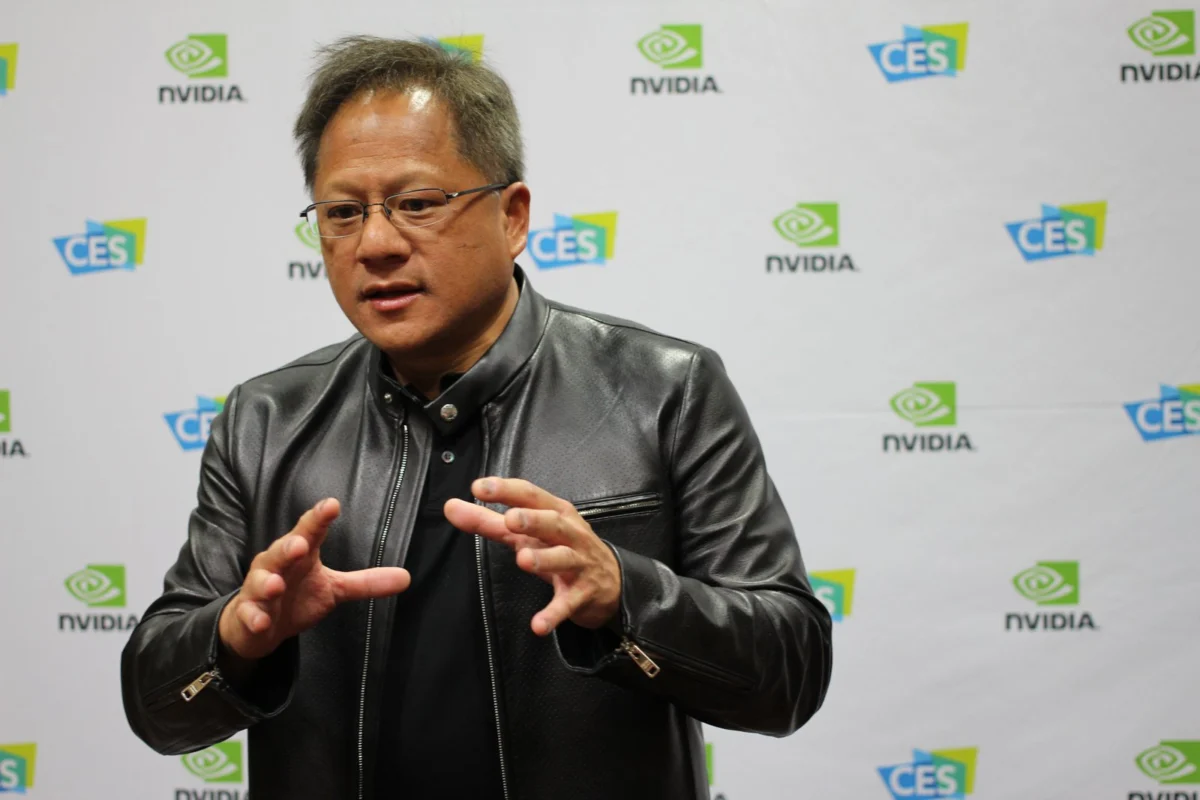
Featured image credit: Jensen Huang at CES in January 2017, an archival photograph predating this announcement. Photo: Maurizio Pesce, via Wikimedia Commons, CC BY 2.0. Resized and compressed for web.

Andrew Cheong · Sir Cloud
Learning through esports.
I’m an esports educator, commentator and creator based in Malaysia.