

Old Guards: What Senior Esports Teaches Us About Learning and Belonging
From Boomers2Gamers to online VALORANT friendlies and CS2 in Singapore, I explore what Old Guards can teach us about lifelong learning and belonging.
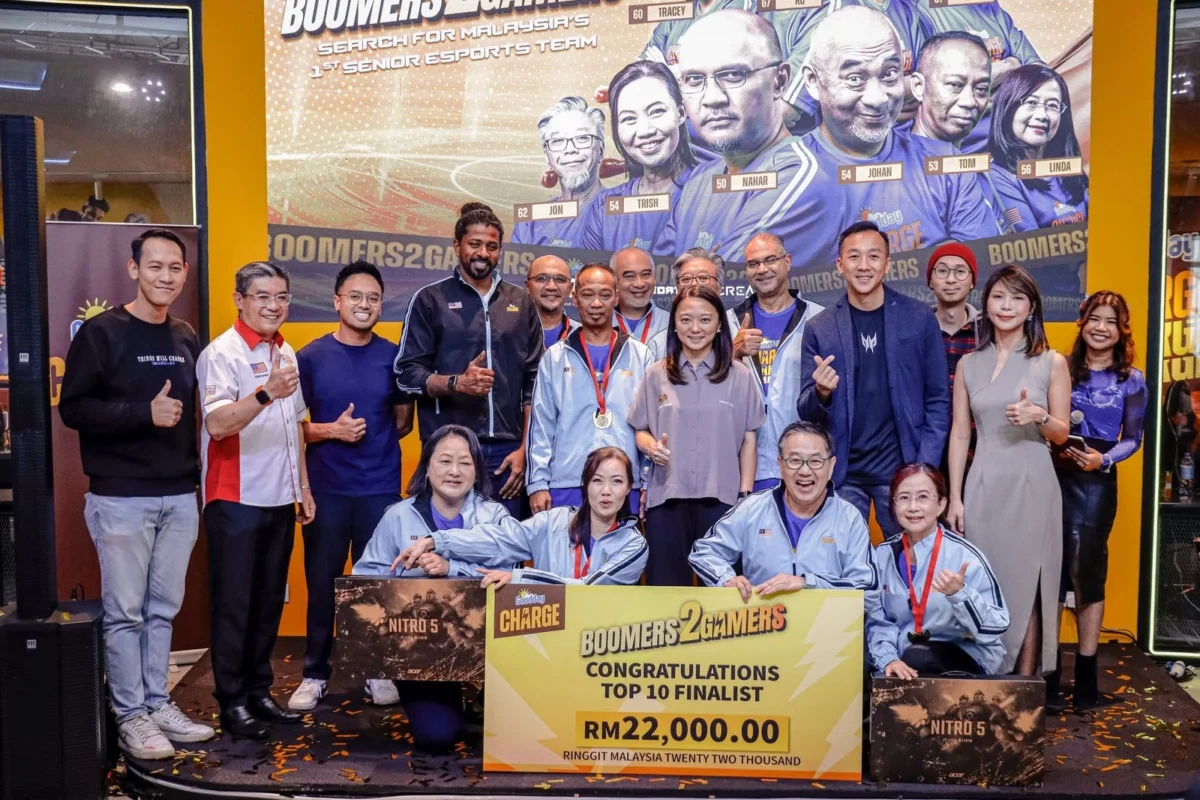
Malaysia’s Old Guards of the Straits shows how senior esports can create opportunities for learning, friendship and meaningful participation. Its journey from Boomers2Gamers to online VALORANT friendlies and Singapore’s Silver Showdown is worth examining, while keeping those educational possibilities separate from unproven claims about improved cognition or preventing dementia.
In Esports Selamatkan Hidup Aku, I wrote about my mother playing Candy Crush. That small story reflected a question that interests me: what can gaming offer people at different stages of their lives?
That question also became part of my work through Boomers2Gamers, where I was involved as a host and helped with some of the coaching. The programme introduced adults aged 50 and above to competitive gaming.
In my social media post on 15 June 2024, I wrote about the participants’ enthusiasm for training. I also noted that they were already scrimming with older players from Singapore. They were practising against another group and taking the challenge seriously.
My involvement is part of why I want to tell this story. It also means being clear about what comes from my experience, what players have told other reporters, and what research can establish.
Who are Old Guards of the Straits?
Old Guards of the Straits, or OGS, is a senior esports team based in Kuala Lumpur and the Klang Valley, with an established history of VALORANT friendlies. Its public profile welcomes Malaysian players aged 50 and above and emphasises both competition and friendship. The listed players are Trish Lim, Nahar Ludhfi, Jon Yap, Linda Tee and Johan Sopiee.
Their story grew from Team eMAS, introduced through Goodday Charge’s Boomers2Gamers programme. Contemporary reporting describes 298 applicants, ten finalists and six selected members, supported by training in skills, strategy, teamwork and communication. Team eMAS was inaugurated on 13 June 2024. Its own history dates OGS’s formation to the following day, with several members moving from Counter-Strike 2 into VALORANT.
The team then developed an international connection. Japan’s Matagi Snipers won their first friendly 2-1 on 25 May 2025. OGS won the rematch 2-1 in June 2026.
These were friendly matches. Their importance goes beyond the scoreboard: a group introduced through a Malaysian programme continued participating and found opponents across borders. That continuity is where the more interesting questions begin.
A terminology detail matters here. OGS welcomes players aged 50+, while Malaysia’s official definition of warga emas begins at 60. We should not assume every member is retired, a grandparent or previously isolated.
From online matches to meeting in Singapore
At the time of writing on 14 November 2026, Silver Showdown’s organiser lists OGS for its international senior Counter-Strike 2 tournament at GAME FEST, Suntec Convention Centre, Hall 406. The announced field represents Chinese Taipei, Japan, Malaysia and Singapore, including Japan’s Matagi Snipers.
This Singapore event uses CS2; the earlier OGS-Matagi friendlies discussed above were played online in VALORANT.
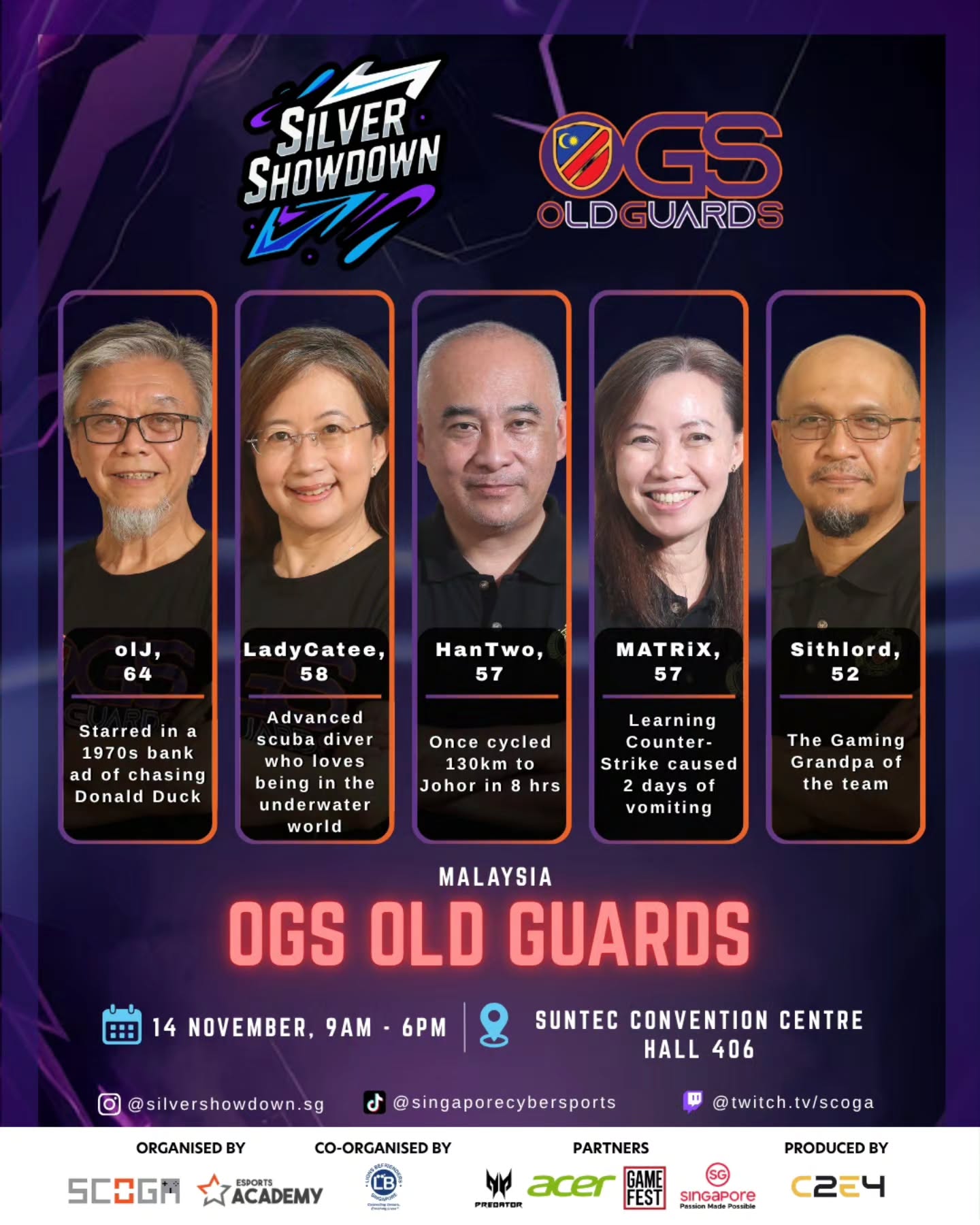
I understand this is the first time OGS and Matagi Snipers are meeting in person. After their online matches, that gives the story another dimension: opponents they know through a screen now have an opportunity to share a physical space.
Matagi’s own campaign for the trip describes the opportunity to meet people they usually interact with online and learn through cultural exchange. The Silver Showdown programme likewise places international friendlies within a wider gathering for senior players.
For me, the learning extends beyond a game’s controls. Travelling, communicating across languages and meeting peers can become part of the experience. The competition gives players a reason to make those connections. That is a meaningful opportunity, even before we discuss the result.
Having something to learn still matters
People can be experienced in life and still be beginners at a game. Learning unfamiliar controls, understanding a map and deciding what information teammates need can put anyone in that position.
That is why I find self-determination theory useful. Ryan, Rigby and Przybylski’s research on gaming motivation examines autonomy, competence and relatedness: having choice, feeling capable and feeling connected.
For example, in a senior esports community, those concepts become practical questions. Did I choose to join? Can I see myself improving? Do I have people who want me on their team?
I am using this as a way to interpret the opportunity OGS represents, rather than suggesting its members have undergone a psychological assessment. Their individual reasons for continuing may differ.
Progress also need not mean reaching a particular rank. Making a useful call, learning one ability or understanding why a round was lost can be a worthwhile achievement. Organisers should make that progress visible, especially when someone is still learning the basics.
A beginner needs somewhere to belong
Jean Lave and Etienne Wenger’s situated learning framework helps explain another part of the story. Learning happens through participation in a community’s practices, with newcomers gradually taking on a fuller role.
For esports, that might mean first watching how a team approaches a round, then practising a manageable responsibility, then contributing more independently. Knowing the rules is one step. Becoming comfortable enough to speak and act within the team is another.
This changes what good coaching looks like. A coach can explain a term, demonstrate a decision and give a beginner room to try it. Teammates can make questions welcome. None of that requires lowering expectations permanently. It requires building a route towards them.
A community becomes more inclusive when newcomers have room to learn, ask questions and take part.
That principle applies well beyond esports. We encounter it when someone learns unfamiliar workplace software, returns to education or joins a new community activity. Being new should not mean being treated as incapable.
I explored a related question in my reflection on Satar, AK Gold and community learning: what support gives someone a chance to develop? Here, that question extends to adults who are beginning something new later in life.
What players say about friendship and teamwork
Old Guards’ website describes close friendships and a commitment to building a community for senior gamers. Competition and camaraderie sit alongside each other in the team’s account. This is a self-description, rather than a measured change in loneliness.
Their opponents offer a useful comparison. In FISTBUMP’s interview with Matagi Snipers, mark25 described gradually learning useful voice communication, while HiroBoo discussed the enjoyment of coordinated teamwork. CaitSith said the Malaysian team initiated contact through social media and that English-language messages increased after the match.
Those are Matagi members’ experiences, not statements from OGS. They nevertheless illustrate something worth investigating: a shared game can give people a reason to communicate, cooperate and meet others.
A team can make a player’s contribution matter to other people. Whether that produces lasting friendship or a stronger sense of belonging is a question to ask members, rather than an outcome to assume from a group photograph.
Can senior esports improve older adults’ health?
The evidence calls for careful language. Enjoying a session, improving at a game and showing a measurable health improvement are different outcomes.
A 2024 French study interviewed 16 Silver Geek participants aged 63 to 97 about Wii workshops and competitions. Participants described mastery, positive emotions and relationships with younger coaches. However, the qualitative study could not establish causation, and participants reported little impact on existing family relationships.
Controlled research is more mixed. A small, nonrandomized Hong Kong pilot involving 48 completers found favourable physical fitness and enjoyment results after competitive Fitness Boxing. It did not find significant effects on loneliness or executive function. Physically active gaming also differs substantially from seated VALORANT.
A 2026 randomized trial involving 34 older adults with mild cognitive impairment did not confirm cognitive or psychiatric benefits after eight weeks of competitive rhythm, puzzle and driving games. The study was small and short, so it does not settle every question. It does show why promises about preventing dementia would go beyond the evidence.
There is room for a hopeful story without those promises. WHO’s healthy ageing framework includes opportunities to learn, maintain relationships and contribute. Those are worthwhile goals for a community to support, even when a hobby does not produce a clinical improvement.
What Old Guards teaches us about senior esports
My view is that access needs to continue after an invitation or launch event. A suitable computer, reliable internet, help with account setup and someone patient enough to explain unfamiliar controls can determine whether a beginner gets to participate.
The social environment needs attention too. The Matagi interview describes frustration and hostile remarks alongside encouragement from other players. A group that wants older newcomers should agree on respectful communication and make mistakes part of learning.
Three small changes would make that welcome more practical:
- Families: Ask what the person enjoys playing and what help they want. Let their interest guide the support.
- Community centres: Offer a supported introduction, with time to learn the controls before expecting competitive play.
- Organisers: Recognise useful communication, teamwork and personal progress alongside match results.
Gaming should also fit into a balanced day. Seated play does not replace physical activity, and a programme should allow opportunities to move and rest. WHO’s physical activity and sedentary behaviour guidance provides the broader health context.
For me, the question has developed from my mother playing Candy Crush to a group learning competitive games and continuing as Old Guards. The activities are different, but both challenge the narrow idea of who gaming is for.
OGS’s match results give us a story to follow. The wider lesson from senior esports is to keep making room for people to learn and contribute throughout their lives. We can begin by asking older adults what they want to try, then helping them take that interest seriously.
Questions about senior esports in Malaysia
Is Old Guards the same team as Team eMAS?
OGS grew from Team eMAS, with several members moving from Counter-Strike 2 into VALORANT. The original eMAS roster had six members; the OGS website lists five.
Are Old Guards playing VALORANT or CS2 in Singapore?
Old Guards are listed for Silver Showdown’s international senior CS2 tournament at GAME FEST, Suntec Singapore, on 14 November 2026. Their earlier international friendlies with Matagi Snipers were online VALORANT matches.
Do all older adults benefit from competitive gaming?
No single activity suits everyone. Enjoyment and participation depend on interests, access, support and the gaming environment. Health benefits should not be assumed.
Does playing VALORANT prevent dementia?
The research discussed here does not establish that VALORANT prevents dementia. Learning a game and enjoying teamwork should be distinguished from proven medical outcomes.
Source note: This perspective combines my involvement in Boomers2Gamers and my 15 June 2024 social post with linked team accounts, organiser announcements, reported interviews and published research. The OGS-Matagi first-meeting detail reflects my understanding; the organiser links establish the event and participating teams. Research checked on 14 November 2026. No new interviews with current OGS members were conducted for this article.
Andrew Cheong · Sir Cloud
Learning through esports.
I’m an esports educator, commentator and creator based in Malaysia.