

After the Final Presentation: What Dreamonaut’s FiresOut! Teaches Us About Learning
After interviewing Dreamonaut’s founders, I reflect on what FiresOut teaches us about testing ideas, listening to players and building a team that can keep learning together.
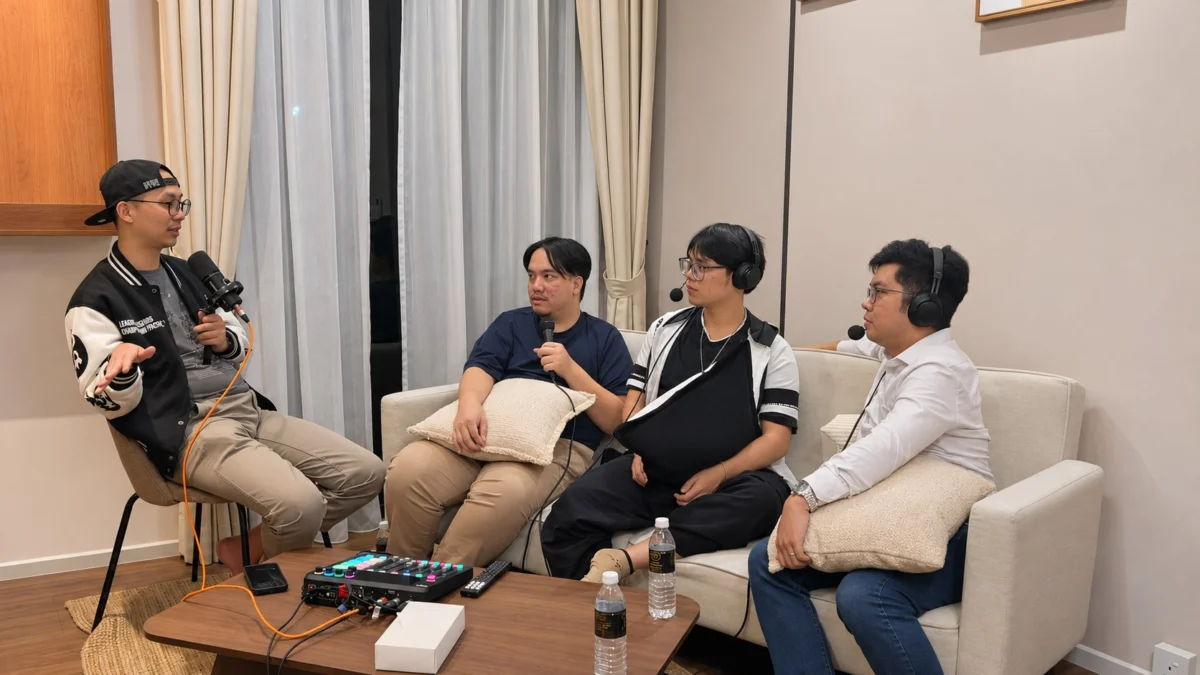
When Roti and I interviewed the co-founders of Dreamonaut Studio about FiresOut!, one of the most useful lessons arrived near the end of our conversation. Our guests were Brenden “Kudoshi” Tan, known as Kudo, and Amirrul “Mirrul” Rasyid.
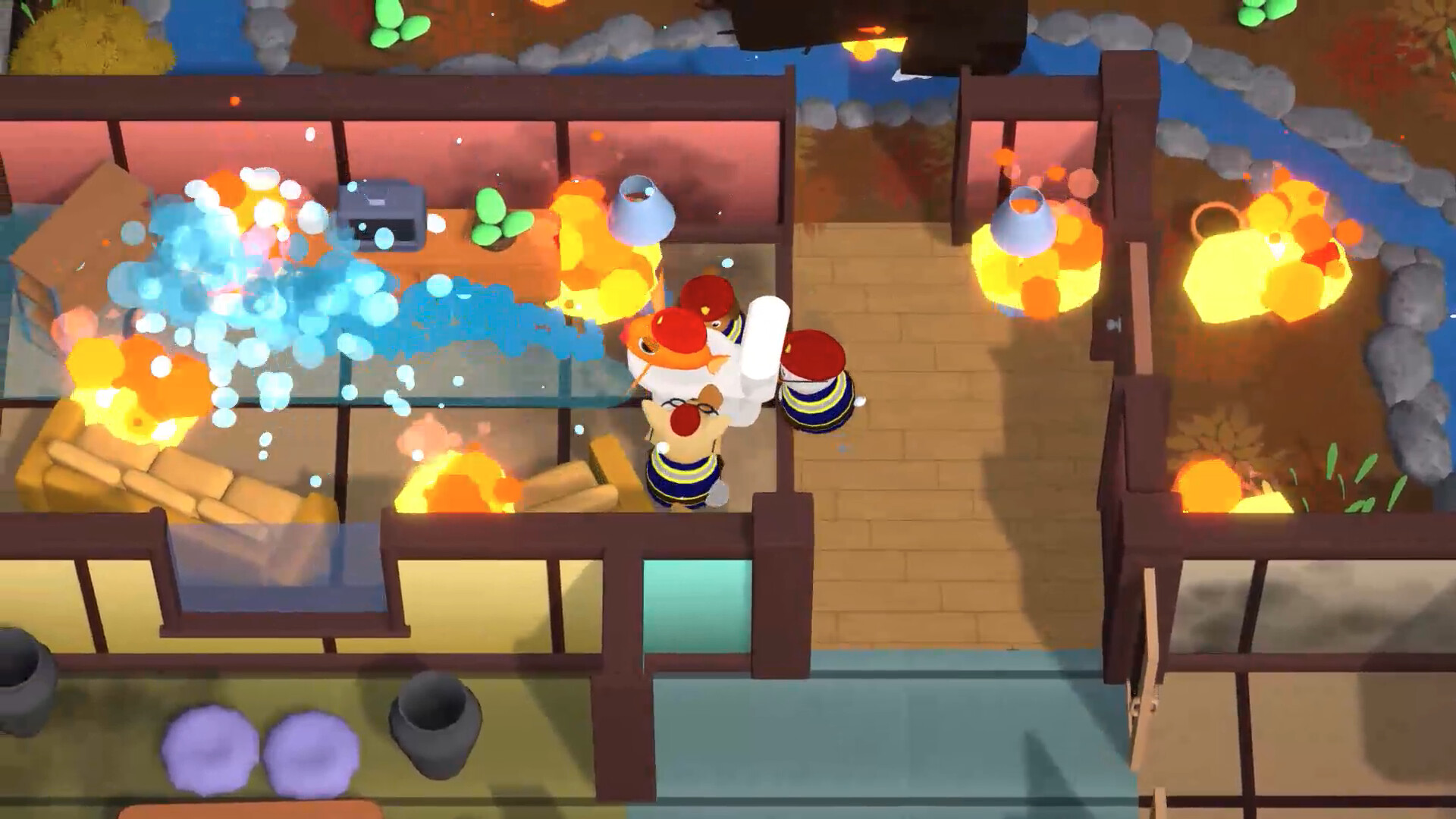
They were talking about FiresOut!, their co-op firefighting game. In the original plan, players were not supposed to hit their friends with an axe. During development, an accidental hit turned out to be funny. That small discovery helped illustrate a bigger change in how they worked: build something, try it, see what happens, then improve it. They describe that shift in the interview at 1:59:34.
That stayed with me because it is a useful way to think about education, too. Dreamonaut’s story shows how a project can create opportunities to learn through feedback, revision and honest teamwork. Those habits matter well beyond making games.
How FiresOut grew beyond the assignment
In our conversation, the founders traced the game back to a final-year project at Asia Pacific University. The idea grew from enjoying games such as Overcooked and Moving Out, then imagining a firefighting version of that cooperative chaos. Encouragement from lecturers helped them consider taking it further. That is their account of the project’s beginnings, from 10:31.
APU’s April 2026 report also identifies Dreamonaut as an incubation project and records its runner-up finish in an Indie Jam pitch competition. The student work had found an audience beyond its assessment.
Continuing brought responsibilities beyond the game itself. Marketing, administration and managing a company needed attention. The founders described how working together on a university event had already demonstrated the value of combining development skills with business experience.
I find that part valuable for students. A shared interest gives people something to talk about. Working on something together reveals who can organise, explain, build, follow up and handle problems. Those contributions become visible when there is a real task to complete.
What FiresOut players revealed about the plan
The founders said they initially approached development by planning everything before building. Their later reflection was that game development needed to be more iterative. Once a feature existed, they could test whether it worked and change what did not.
The axe example makes that reflection concrete. Another came from watching streamers stack characters near a window and find an unexpected route. A developer could have a clear idea of how a level should work, then discover that players had other ideas. The founders discuss that surprise at 1:26:40.
This is where David Kolb’s experiential learning cycle becomes a useful lens. An experience provides material for reflection; that reflection informs an explanation or principle, which can then be tested through further action. Alice and David Kolb’s 2017 guide for higher-education educators explains those connections.
Applied to the axe story, the experience was the unexpected interaction. Reflection meant noticing what made it enjoyable. My interpretation is that playful interference could contribute to their intended cooperative chaos. Testing that idea would mean trying it again and judging how it affected the experience.
That final step matters. One funny accident does not settle every design decision. It gives the team something worth investigating. I am using Kolb’s model to interpret their account, rather than suggesting the studio followed a formal educational intervention or that the model guarantees a successful game.
What FiresOut can teach us about listening
The same openness appears in their discussion of difficulty. They wanted an approachable game, while experienced players could find another challenge in completing a level faster. Different people could find different reasons to enjoy the same activity, as they explain from 1:21:13.
For an educator, that raises a practical question: have I designed a task only for the learner I expected? Someone may struggle with a control I consider obvious. Another may finish quickly and need a deeper challenge. Watching both gives me information that a plan alone cannot provide. That is the kind of reflection I want to make space for in my teaching and workshops.
The founders also discussed creators talking about their work among themselves instead of speaking to players. Their closing reflection on marketing was about sharing work with the people who might enjoy it. I see an educational connection there: communicating a project can also expose it to questions its creators have stopped asking.
A learning process needs a team that can speak honestly
The conversation about FiresOut also returned to money and motivation. The founders described reinvesting competition winnings and working towards profitability. That was the situation they described during the interview, not an audited statement of their present finances.
More memorable to me was their practice of regular gut checks: checking how people were doing and whether they could keep going. They also stressed transparency about money, direction and what everyone was accepting. Those discussions appear from 47:50 and from 57:54.
Amy Edmondson’s work on intelligent failure offers a useful guardrail. In her Harvard Business School explanation, a worthwhile experiment explores uncertain territory, draws on existing knowledge and is kept small enough to limit the risk while still teaching us something. That is different from celebrating every mistake as progress.
For me, that care should extend to the people carrying the experiment. Can somebody admit that a plan is not working, or that they cannot afford to continue, without being treated as less committed? A team needs room to hear that answer.
I would be careful about presenting financial sacrifice as something students should copy. People have different responsibilities and access to support. Clear payment arrangements, realistic commitments and the freedom to reconsider matter. Checking on a teammate should leave room for an honest answer, including one that changes the plan.
Four questions to make the learning visible
For a student project, esports activity or community event, I would turn this discussion into a short evidence trail. This is an exercise I am proposing from the interview, rather than a teaching method I have already tested with Dreamonaut.
- What did we expect? Write down one assumption before starting. For example, that a newcomer can understand the instructions without help.
- What actually happened? Keep a specific observation, such as where someone stopped or what they asked. Separate it from your explanation of why.
- What did we change or keep, and why? Connect the decision to what you observed. An unexpected action may be worth keeping. Explain the trade-off, especially if helping one user makes another task harder.
- What will we test next? Set a manageable next attempt, including the time and support the team can realistically give it.
The record can be brief. A screenshot, a few notes and a revised version may be enough. The useful part is the link between the evidence and the decision. Even an unsuccessful attempt can leave a clear account of what the team understood differently afterwards.
Where Dreamonaut’s FiresOut! journey stands now
The interview captures an earlier stage, when a demo and publisher search were still being discussed. As checked on 22 November 2026, a free Steam demo is available, with a release date of 4 June 2026. The separate full-game page names Dreamonaut Studio as developer and Judatone Studios as publisher. Its release date remains to be announced.
Those are concrete developments. They do not tell us the project’s sales, profitability or eventual reception. A demo creates another opportunity to hear from players. A publisher listing tells us who is named publicly, without revealing the terms of the agreement.
There is also a forthcoming opportunity to encounter the studio locally. The SIGGRAPH Asia 2026 exhibition roster, marked accurate as of 12 November, lists Dreamonaut Studio in the Indie Gallery. The exhibition is scheduled for 2 to 4 December 2026 at Kuala Lumpur Convention Centre. The roster confirms the studio’s participation; it does not specify the game or build visitors will be able to try.
What I take from our conversation is a way of approaching work: make something people can try, pay attention to what happens, explain your next decision and keep talking to the people doing it with you. That is a useful lesson while a project is still unfolding.
Questions about Dreamonaut, FiresOut and learning
What is FiresOut, and can I play it?
FiresOut! is a co-op firefighting game by Dreamonaut Studio. A free Steam demo is available. The separate full-game page names Judatone Studios as publisher and lists the release date as to be announced, as checked on 22 November 2026.
How does experiential learning apply to this story?
The founders describe building features, observing unexpected interactions and revising their approach. Kolb’s cycle helps explain the connection between experience, reflection, an emerging idea and another test. This is an interpretation of their account, not a measured study of the studio.
What can people outside game development take from it?
Record an expectation, observe what happens, explain a revision and choose a realistic next test. Pair that process with honest conversations about responsibilities and capacity. A student group or community team can use those questions without needing to build a game.
For more reflections on games, education and community, explore my Industry Perspectives.
Author’s note: Roti and I interviewed Dreamonaut’s co-founders on Podcast Tak Berlesen, episode 102. This perspective draws on that conversation and the linked research. Current game details were checked on 22 November 2026.
Andrew Cheong · Sir Cloud
Learning through esports.
I’m an esports educator, commentator and creator based in Malaysia.